Latest News

Ross Latimer's Hot Wheels Custom Harley Wins Big at the DC IMS

Hot Wheels custom Harley side view

Ross Latimer's fast and furious Hot Wheels custom Harley in a quite moment

Understandably, a number of the big, corporate bike builders have won various categories of the J&P Ultimate Builder Competition in the first three stops of the Progressive International Motorcycle Show (IMS). After all, the major players in the custom bike world have the talent, experience, and resources to design and execute some amazing builds.

However, it is refreshing and encouraging that some small, independent builders have had notable success at the competitions as well. Ross Latimer, of Rats Customs, in Nokesville, Virginia, is one of the ‘small pebbles’ who has made big waves at the K&N-sponsored competition. Latimer walked away with two first-place awards at the Washington DC stop of the IMS.

We are going to show you both of Latimer’s winning builds in separate article installments. The focus of this first profile is his show-stopping Hot Wheels custom that won the Modified Harley category. Hot Wheels is a stunning build that will tug at the heart strings of everyone who played with the iconic pocket cars in their youth. However, it is interesting that Latimer’s inspiration for the build was much bigger and louder than the iconic toy cars.

Hot Wheels custom Harley at the Washington DC IMS J&P Competition

The DC International Motorcycle Show was a nice payday for Ross Latimer

“My motivation for building the Hot Wheels bike was growing up and watching Don Prudhomme race the Hot Wheels funny car,” Latimer said. “My family has always been huge into drag racing and still is.”

Latimer’s passion for creating motorized magic stems from that same period in his youth. “That's kind of where my background comes from,” he said. “Growing up watching my dad fabricate and weld and make sparks was awesome, and all I ever wanted to do.”

Latimer’s 2002 Harley-Davidson® Sportster pays tribute to some of the most colorful years in drag racing history in a powerful way – both visually and literally. Let’s start with the literal. Hot Wheels is built around a 1250cc Hammer Performance engine that Latimer calls a “mountain of a motor.” That twin cylinder iron mountain pumps out over 110 horsepower and produces boatloads of torque. Clearly this is not a docile show bike.

Fittingly, that potent V-twin breathes through a K&N performance intake that contributes, in no small way, to the impressive power numbers of the Hot Wheels custom. On the other end, spent combustibles exit through beautiful exhaust bends that are reminiscent of a massive trombone. Certainly, the exhaust note is every bit as melodic to motorheads as any wind instrument.

Hot Wheels custom Harley wheelie

The powerful 1250cc V-twin makes it hard to keep the front wheel down

Like so many passionate builders, Latimer finds joy in elements of the project that may not be instantly recognized by the casual observer. “Some cool features on the bike are the brake line that runs through the swing arm, and the two left fork legs to get rid of the pinch bolt,” said Latimer.

What even the casual observer will appreciate is the scintillating paint job. Latimer’s Harley wears a custom candy teal Hot Wheels paint scheme that extends from the front of the tank though the very cool stubby, ‘snarled-lip’ of a rear fender. Of course, that classic swooping Hot Wheels logo is featured prominently on the tank, and K&N is more than proud that our decal graces the side panel!

From the tall, clean spoked front wheel to the fat, funny car-inspired Dunlop tire out back, the Hot Wheels custom oozes retro-cool.

In the end, the success of the smaller builders and the recognition they are receiving is not lost on Latimer. “I’d like to say I appreciate that K&N sponsors and gives back to the small-time builders,” Latimer said.

Check back for our upcoming feature on Ross Latimer’s other Washington DC IMS J&P show winner.

clear

K&N PRODUCT SEARCH     WHERE TO BUY K&N

Drenched in Carbon Fiber and Oozing Horsepower, this 2015 Ford Mustang Has it All

2015 Ford Mustang with carbon fiber body panels and wide body kit

This 2015 Ford Mustang is anything but your run-of-the-mill pony car. It is one-of-a-kind.

The battle between Ford and Chevy has been an epic fight almost since the two companies began making cars. It has intensified through the years and only got worse after the introduction of the pony car class of vehicle. A pony car is classified as a sporty, high performance American automobile. Currently, three cars fall into that category, the Ford Mustang, the Chevrolet Camaro, and the Dodge Challenger.

It is a known fact that Ford and Chevy owners are bitter foes, at times even rivaling the likes of the Chicago Bears and the Green Bay Packers, or the Hatfields and McCoys for you non-sports readers. No matter what side you are on, it can be agreed that through the years the styling, power, and technology associated with the Mustang and Camaro has grown to a point where they are as popular as ever.

2015 Ford Mustang interior with carbon fiber accents throughout

The interior of John Pudlas Mustang is as spectacular as the exterior

Recently, we were able to get a Mustang owner and a Camaro owner together long enough to get some photos of their respective rides. This is a story about the Mustang. John Pudlas is the Director of Sales for HCM Carbon. He is the owner of the 2015 Ford Mustang GT you see before you. Of course, working for a carbon parts manufacturer, you would expect the car to have some carbon pieces. But what John and HCM Carbon owner, Ernie Sigala have done to this S550 Mustang is incredible.

2015 Ford Mustang with carbon fiber fender flares and Ferrada wheels

The HCM Carbon fender flares cover the Ferrada wheel nicely

Starting with a blank canvas can be a daunting task, but as we have seen with some of Sigala’s past builds, he is up to it. The first thing they did to Pudlas’ Mustang was cut the top off. You read that right, they cut the roof over the front seats completely off. This turned the coupe into the world’s first S550 Mustang targa top. From there it was time to get to work designing wide body fenders, a new hood, front splitter, rear diffuser, a wing, and much more out of carbon for the car.

2015 Ford Mustang with Vortech supercharger and carbon fiber body panels and matte purple wrap

For SEMA and CES, John had his Mustang wrapped in matte purple by EAWraps in Scottsdale, AZ

With those parts being designed, a lowering kit from Steeda was installed, giving the ‘Stang a meaner, more aerodynamic look. To fill the new widened fenders, a set of 20-inch Ferrada wheels was wrapped in 305/30 and 315/35 Nitto rubber and bolted to the four corners. A car with looks like this one had to have something mean under the hood and that was next on the agenda. The 5.0L received some new internals, along with a power adder in the form of a Vortech supercharger. The blower is capped off by a K&N cone air filter to protect the built motor behind it.

John and Ernie built the car to show off their capabilities and subsequently took the car to the 2016 SEMA show and the CES show in Las Vegas. At both shows, the car was a real head turner and gave them a sense of pride knowing they had built an incredible machine that so many people found appealing.

The HCM Carbon Mustang was also featured in the 2017 K&N calendar 89-11493-17 in the month of April.

clear

K&N PRODUCT SEARCH     WHERE TO BUY K&N

NASCAR Changes Their Logo for First Time in 40 Years

NASCAR, Cup Series, Logo

NASCAR changed its logo for the first time since 1976 to include a new font and styling

NASCAR changed its logo for the first time since 1976. The change comes in conjunction with Monster Energy becoming the primary sponsor of the Cup Series. NASCAR, the National Association for Stock Car Racing, was founded in 1948 by Bill France Sr. The original logo had red and white checkered flags crossed with two cars facing each other.

The NASCAR logo has changed four times since the original logo was unveiled in 1948. The first change came in 1956 and was used until 1963. The logo changed again in 1964 until 1975.

The NASCAR logo changed to its multi-color bar in 1976. The latest change is a slight modification of the previous logo, with multi-color bars and a new font.

“Our new NASCAR mark is modern, timeless, and embraces the heritage of our sport,” Jill Gregory, NASCAR's Chief Marketing Officer, said in a release. “It was important for us to recognize our history and implement a piece of each previous mark in the new design. Our goal was to evolve the sport's visual identity to make it concise, relevant and functional, while respecting and maintaining the unique qualities of the original mark.”

NASCAR, Cup Series, Monster Energy, Logo

Monster Energy is the new title sponsor of the NASCAR Cup Series.

The highest level of NASCAR racing was known as the Grand National Series until 1972. The R.J. Reynolds Tobacco Company became NASCAR's first primary sponsor in 1972. It was known as the NASCAR Winston Cup Series until 2003.

In 2004, Nextel Communications became the title sponsor of NASCAR and changed the name to the Nextel Cup Series. In 2008, it became the Sprint Cup Series when Nextel and Sprint merged companies.

Monster Energy became the new title sponsor of the NASCAR Cup Series at the beginning of 2017.

“Monster Energy is a brand built on excitement and enthusiasm, qualities that align with NASCAR,” Brian France, NASCAR Chairman and CEO said in a release. “This sponsorship position is the most unique in all of sports and entertainment, and we are thrilled to have a partner that will help us further elevate the series. Today’s announcement is the culmination of a thorough search, one that resulted in the right partner at this important time in our sport’s history.”

NASCAR, Cup Series

NASCAR used this logo from 1956 to 1973.

The NASCAR K&N Pro Series East and West have gone through name changes as well. The West Series started as the Pacific Coast Late Model Circuit in 1954. It became the Grand National West Series, then the Winston Grand National West Series before K&N took over as the title sponsor of the series.

The K&N East Series was originally formed in 1987 as the Busch Grand National North Series and raced primarily in the northeastern part of the United States. The series name changed to the Busch East in 2006.

In 2003, NASCAR unified the rules of the East and West Series and added the Toyota All-Star Showdown race pitting drivers and teams from both series against each other.

K&N Engineering became the title sponsor of the NASCAR Pro Series East and West Series in 2010.

clear

K&N PRODUCT SEARCH     WHERE TO BUY K&N

The Joker Machine Custom CX500 Keeps the Café Racer Tradition Alive

Joker Machine CX500 Cafe Racer left view

The CX500 proves to be an exceptional base for a cafe racer in the hands of Joker Machine

Honda’s CX500 was only produced from the late 1970s through the mid 1980s. There were several variations built around the half-liter motor, including a now rare turbo version. Some call the bike odd, others call it innovative. No matter what you call it, the unique combination of the Moto Guzzi-esque cylinder configuration and the clean, industrial lines of the water-cooled engine has proven attractive to a fair number of custom builders over the years.

Arguably one of the coolest CX500 customs ever built was on display at the 2016 SEMA show in Las Vegas. It was created by Joker Machine, an innovative aftermarket parts company that manufactures beautiful bolt-on accessories for a huge array of motorcycles. The Joker Machine Café Racer is an example of what happens when a unique bike is placed in the hands of a talented builder. The donor Honda is a 1978, making it one of the earliest models. Its rebirth, courtesy of the creative guys at Joker Machine, took place almost four decades later.

Joker Machine CX500 Cafe Racer right view

Some of the original lines of the CX and tasteful cafe racer touches define the Joker Machine custom

What’s refreshing about the Joker CX is that it retains the basic lines of the stock bike. Café racers have a deep-rooted history of tweaking a bike into a personal statement by removing all superfluous stock items and adding only what will make it go faster. Traditional café bikes were skeletal versions of the models that rolled off the assembly line. Joker Machine honors that tradition, in large part, by not morphing the bike into something unrecognizable. The stock CX500 tank remains – albeit with a beautiful paintjob – and the engine rests as the focal point of the Joker Machine custom. Even the stock Honda 5-star wheels are retained, nicely updated with a unique matte powder coating.

The café tradition of minimalism is also on full display on the Joker bike. The side panels are conspicuously absent leaving a ‘window to the other side.’ Fittingly, the only things occupying the space between the engine and rear wheel are the K&N pod filters! We can’t think of a better way to frame the best performance filters in the world.

Joker Machine CX500 Cafe Racer engine at SEMA in Las Vegas

Joker Machine's beautiful head covers sit just ahead of the K&N pod air filters

Custom parts abound on the CX. Joker Machine’s amazing valve covers grace those unique, upward-canted cylinders. The billet upper triple clamp assembly is a work of art and holds just enough instrumentation to give vital ride info. Speaking of billet, the fuel access cover is a signature piece that carries the company's winged J logo. The stock radiator has been nicely down-sized and is framed in more of the Joker Machine aluminum craftsmanship. Completing the billet add-ons are the rear-set pegs and foot controls which are as beautifully machined as the triple clamp.

Joker Machine CX500 Cafe Racer billet triple clamp at SEMA in Las Vegas

Joker Machine's billet work for the CX is everywhere on build

The rounded tail section and unified seat add to the racing form of the build. That rear end eliminates what may be the weakest styling element of a stock CX – a seat that Honda’s designers seemingly modeled after a gymnastic pommel horse. The low clip-on bars and bar-end mirrors complete the café posture of the bike. The traditional café style of a chopped (or missing) front fender is carried out on the Joker Machine CX with a subtle and close-fit matte black part.

The Lake Havasu City, Arizona-based Joker Machine has created a winner with the CX500 Café Racer. K&N is proud to have our filters on display and protecting the ultra-cool custom.

clear

K&N PRODUCT SEARCH     WHERE TO BUY K&N

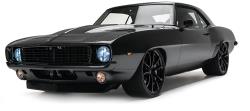
Mike Cavanah Loves 1969 Camaros, But Wasn’t In The Market Until He Saw This Car

Very little of the original Camaro is left in Mike Cavanah's Pro Street machine

While Mike Cavanah’s 1969 Camaro looks subtle, its performance is anything but

When Mike Cavanah started out to build his ultimate Pro Touring car, he bought a 1969 Camaro off of eBay as a starting point. While a huge fan of the Camaro and the '69 sheet metal in particular, Mike felt that perhaps there were enough Pro Touring ’69 Camaros already in existence and changed his plans. Instead he built his now famous 1966 Chevelle Grand Sport.

Fast toward a few years. Construction of the Chevelle was completed and Mike was enjoying driving it around the Santa Monica Mountains as well as at track days and autocross events. And then another 1969 Camaro sort of dropped into his lap. The car was stunning, the price was right, and it needed virtually nothing, and since he wasn’t faced with a three-year build as there was to get the Chevelle on the road, he bought it.
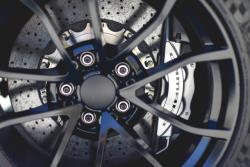
Powerful brakes are needed when there's a powerful engine under the hood

15.5-inch Brembo calipers fitted with ceramic rotors and pads are on each corner of this 1969 Camaro

Before we get into specifics, the car has a history about as unique as you’ll find. It was purchased by Major League pitcher Brad Penny, then playing for the Dodgers, with the intent to have it rebuilt and modified. He took it to the shop of late Boyd Coddington where it was stripped to a bare shell and all rust and damage repaired. After the master builder passed away Penny moved the project to Timeless Kustoms, where it was completed in 2013. Distracted by his career, Penny sold the car to another party who then brought the car back to Timeless Kustoms. In turn Timeless Kustoms, knowing his fondness for 1969 Camaros, contacted Mike.

Beyond the 1969 body, Mike was attracted to the car because of the high level of workmanship and attention to detail of Timeless Kustoms and the fact the car was ready to drive as it sat. Mike ordered a few changes to suit his personal preferences and soon he was out running the canyons near his home.
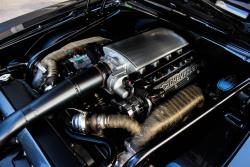
While the Camaro would have come with a small block V-8, its nothing like this engine

The twin-turbo 380 CID Chevrolet LSX small block is tuned to produce in excess of 750 horsepower

Back to the build: Timeless Kustoms cut out the floor of the Camaro’s OEM firewall-back unibody and replaced it with a body on frame configuration with a custom fabricated floor pan. The Camaro shell now sits on an Art Morrison 2×4 Max G chassis, which features C6 Corvette independent front suspension and a four-link solid axle rear suspension. To improve rigidity, a 10-point roll cage was fabricated and installed in a manner as to not draw too much attention to itself. Out on the corners are Corvette Z06 wheels bolted to 15.5-inch Brembo carbon ceramic brakes all around.

Under the hood sits a Chevy LSX small block assembled by Timeless Kustoms, which is fed by twin turbos. The LSX block measures 380 CID with a 4.125-inch bore and 3.620-inch stroke with a rational 9.0:1 compression ratio. A camshaft was custom-ground to match the characteristics of the turbo LSX. Atop the block are a set of CNC machined LS7 cylinder heads. Air is drawn in through a K&N 69-series air intake system, utilizing the MAF sensor connector to tie into the GM engine harness and E-67 computer.

Past the filter, two Precision Turbo water-cooled turbochargers upgraded to ball bearings squeeze the incoming air and then move it through a Spearco intercooler to get rid of as much heat as possible. The pressurized air meets fuel in the cylinders drawn from the custom fabricated fuel cell by a Fuelab boost referenced in-tank 1200 HP fuel pump system.
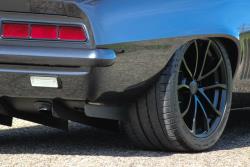
Under car aerodynamics have become a popular feature among Pro Street builders

Check out the custom under diffuser and rear wing designed to keep the car planted at speed

Taking all the abuse is a Tremec wide ratio six-speed transmission from American Powertrain. Between the engine and the gearbox is a Centerforce twin disc clutch set-up. An aluminum driveshaft transfers all that grunt back to a Ford 9-inch third member, carrying a Detroit Tru-Trac limited slip differential fitted with a 3.50:1 ring and pinion.

Enough about what’s under the body shell. Let’s talk about the exterior, because if the mechanicals are fascinating the exterior is stunning. As is common practice these days, the bumpers were tucked tight to the body. Further, the drip rails were shaved for both esthetics and aerodynamics. A custom rear wing was fabricated by Timeless Kustoms as well as the undercar diffuser, to help keep the car planted at speed. To help pull heat through the intercoolers, a set of subtle air extractors were fitted in the hood. Detroit Speed powered headlamp doors are fitted to the grille, much like the option on some first generation Camaros. If you can’t name the paint color, don’t worry as it’s not in your typical hot rodders’ repertoire. It’s actually based on BMW’s luscious Sparkling Graphite.
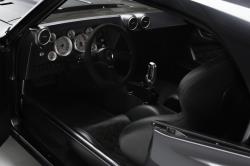
Like all good race cars all controls are reached easily by the driver

The cockpit is set up for serious driving with supportive seats and an array of analog gauges

Of course the interior is up to the standards as set by the mechanicals and the exterior. One of the first things you notice is the Marquez design dash packed full of fully analog Auto Meter gauges, tracking virtually every function on the car. The seats were custom built, and designed for fast road or track day use. The interior upholstery is by Eric Thorson, along with a one piece suede headliner and Accu-Mat sound deadening. It does get a little warm from time to time where Mike lives, so a Vintage Air air conditioning system was installed.

As impressive as the list of components and modifications are, they’re little substitute for the impact the car makes in person on your eyes and your ears. For the time being, you’ll have to catch Mike driving the canyons to spot the car as he’s decided that he prefers to bring his Chevelle Grand Sport to shows and competitions. But with a fantastic as this Camaro, you never know – he may change his mind.

clear

K&N PRODUCT SEARCH     WHERE TO BUY K&N